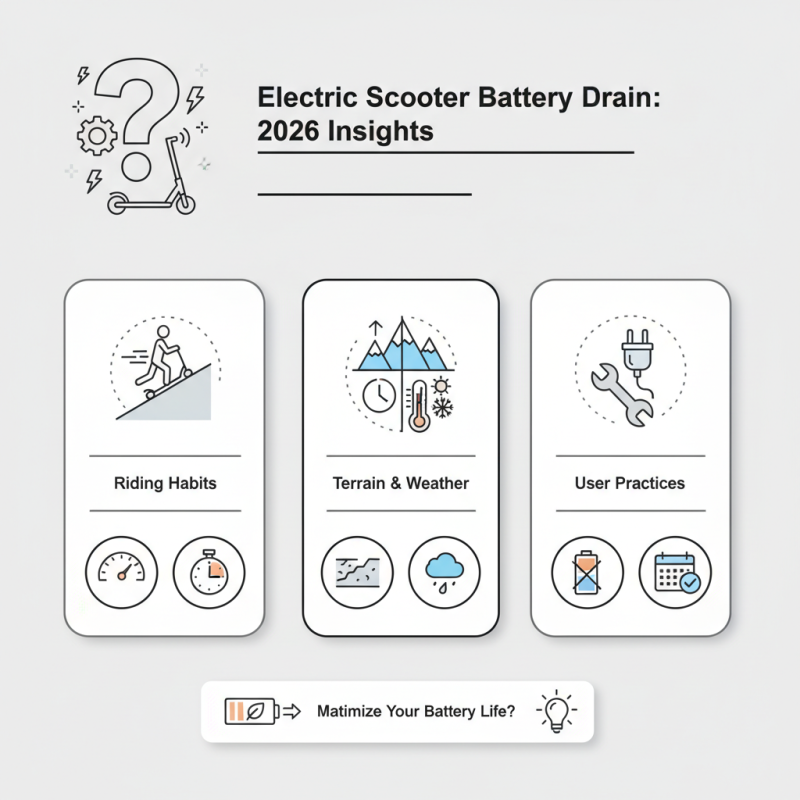
Electric scooters have surged in popularity, but many users are frustrated. A common question arises: "Why is my electric scooter battery draining so fast?" Various studies indicate that battery efficiency is influenced by many factors. According to a 2025 report by the International Electric Transportation Association, battery lifespan is often affected by riding habits, terrain, and weather conditions.
For instance, riding on steep inclines or in extreme temperatures can accelerate battery depletion. Reports suggest that users can lose up to 25% of battery life under heavy use. Nonetheless, many still overlook basic maintenance practices and optimal charging techniques, which can lead to premature battery drain.
Recognizing these factors is crucial for maximizing battery life. Reflecting on personal usage and charging routines can yield insights into why batteries fail prematurely. Users often ignore manufacturer recommendations, which can create lasting issues. Understanding the nuances of battery performance is essential to improving the overall experience with electric scooters.
Understanding Electric Scooter Battery Basics and Capacity
When discussing electric scooter battery capacity, it’s essential to understand how these batteries function. Batteries are rated by their amp-hour (Ah) capacity. This rating indicates how much energy a battery can store. A larger capacity means longer rides. However, even a sizable battery may drain quickly under certain conditions.
Several factors can cause your battery to drain faster than expected. Riding at high speeds or on steep inclines uses more power. Additionally, factors like temperature can impact battery efficiency. Cold weather can reduce battery capacity significantly, leading to shorter rides. Inspecting your charging habits is crucial. Overcharging and undercharging can degrade battery health over time, causing performance issues.
Another important detail is age. As batteries age, they lose capacity. This is a natural process, and awareness of it is key. Regular maintenance and proper charging can extend battery life. Yet, users often overlook these aspects, focusing instead on performance. It’s a common oversight that can lead to frustration and unexpected limitations while riding.
Battery Drain Analysis of Electric Scooters in 2026
This chart illustrates the average battery drain rates of electric scooters across different usage conditions in 2026. The data reflects common scenarios users might encounter.
Common Factors Leading to Rapid Battery Drain in 2026
In 2026, electric scooter batteries face rapid drainage, influenced by multiple factors. One primary reason is battery age. As batteries age, their capacity diminishes, leading to shorter rides. Research indicates that, after two years, a lithium-ion battery can lose up to 20% of its capacity. This decline significantly impacts performance and range available to users.
Temperature also plays a crucial role in battery performance. Extremely hot or cold conditions can lead to decreased efficiency. A study found that batteries operate best at temperatures between 20°C and 25°C. Outside of this range, users may notice a drop in battery life. In hot weather, battery chemistry can accelerate degradation. In contrast, cold weather can slow down discharge rates, making rides shorter.
Overuse and improper charging habits are common pitfalls. Frequent partial charges disrupt battery management systems. This habit can ultimately lead to capacity loss. Additionally, heavy loads might result in increased power consumption. The combination of these factors creates a cycle of frustration for users seeking reliable performance. Awareness and understanding of these issues are essential for optimal electric scooter operation.
Why is My Electric Scooter Battery Draining So Fast in 2026? - Common Factors Leading to Rapid Battery Drain in 2026
| Factor |
Description |
Impact on Battery Life (%) |
Prevention Tips |
| Temperature Extremes |
Batteries operate less efficiently in extreme cold or heat. |
20-30% |
Store scooter in moderate temperatures. |
| Frequent Short Trips |
Short trips prevent the battery from fully charging and discharging. |
15-25% |
Combine errands into longer trips. |
| High Speeds |
Riding at full throttle consumes more power. |
10-20% |
Travel at moderate speeds. |
| Poor Maintenance |
Neglecting tire pressure and other maintenance increases drag. |
15-20% |
Regularly check and maintain your scooter. |
| Battery Age |
Older batteries naturally hold less charge and discharge faster. |
25-40% |
Consider replacing the battery after a few years. |
Environmental Conditions Impacting Electric Scooter Battery Life
Environmental conditions significantly affect electric scooter battery life.
Temperature extremes, both hot and cold, can reduce battery efficiency. For instance, in very cold weather, the chemical reactions in the battery slow down, leading to faster drainage.
Similarly, in hot climates, batteries may overheat. An overheated battery often leads to reduced lifespan and performance.
Humidity also plays a vital role. High humidity can cause internal corrosion, impacting the battery's ability to hold a charge.
On the other hand, extremely dry conditions can affect battery performance. Riders often overlook how these factors affect overall battery health.
Regular checks in varying environments are essential.
Riding habits matter too. Frequent full-throttle acceleration or riding uphill can drain the battery quickly.
Those who ride less frequently may find their batteries depleting faster due to self-discharge.
Knowing your local environment helps in managing battery performance effectively. Adaptation is crucial to prolonging battery life.
Maintenance Tips for Extending Electric Scooter Battery Longevity
Electric scooters have surged in popularity, yet many users experience rapid battery drainage. To combat this issue, proper maintenance is essential for extending battery longevity. Research indicates that battery lifespan can be reduced by up to 30% if the scooter is charged improperly or if the battery is frequently drained below 20%.
One critical practice is to avoid fast-charging methods. While it may seem convenient, fast charging can generate excess heat, degrading battery health. A study by the International Energy Agency found that maintaining a moderate charging speed increases battery efficiency over time. It’s also advisable to conduct regular checks on tire pressure. Low tire pressure increases resistance, forcing the battery to work harder. A survey showed that scooters with properly inflated tires had a 15% better range.
Storage conditions heavily influence battery performance. Keeping the scooter in extreme temperatures can cause irreversible damage. Ideally, store the scooter in a cool, dry place. Additionally, users should consider discharging and recharging their batteries periodically. This helps calibrate the battery's internal management system. Following these tips can make a noticeable difference, but many still overlook them, leading to unexpected battery issues.
Future Technologies That Could Improve Electric Scooter Battery Efficiency
Electric scooter batteries often drain quickly, presenting a challenge for daily commuters. As we look to the future, innovations could enhance battery efficiency significantly. Reports suggest that advanced lithium-sulfur batteries could offer nearly five times the energy density of current lithium-ion models. This leap may extend the range of electric scooters while minimizing weight.
Another promising technology is solid-state batteries, currently in development. These batteries promise improved safety and longevity, crucial for everyday use. Analysts predict that by 2026, solid-state batteries could reduce charge times by up to 50%. The potential decrease in downtime might encourage more users to switch to electric scooters for urban travel.
Energy management systems are also evolving. Smart charging solutions could optimize battery usage based on real-time data. Users might avoid rapid draining issues by leveraging apps that monitor battery health. Yet, the integration of such technology is complex and raises questions about user adaptation. With these advancements, the future of electric scooter batteries looks hopeful, though challenges remain.
FAQS
h) capacity indicate for electric scooter batteries?
High speeds and steep inclines drain battery faster. Cold temperatures also significantly reduce battery efficiency.
Older batteries lose capacity naturally. This affects range and overall performance of electric scooters.
Overcharging or undercharging can degrade battery health over time. Regular checks on these habits are essential.
Storing scooters in extreme temperatures can cause damage. A cool, dry place is best for battery health.
Low tire pressure increases resistance, making the battery work harder. Properly inflated tires can improve range by 15%.
Fast charging generates excess heat and degrades battery health over time. Moderate charging speeds are more efficient.
Advanced lithium-sulfur and solid-state batteries could significantly extend range and reduce charge times in the future.
Smart charging solutions can optimize battery usage based on real-time data, helping prevent rapid drainage issues.
Many users focus on performance rather than maintenance, leading to frustration and unexpected battery limitations.
Conclusion
In the quest to answer "Why is my electric scooter battery draining so fast," it’s essential to grasp the fundamentals of electric scooter battery capacity and usage. Several common factors contribute to rapid battery drain in 2026, including increased demand for higher speeds and longer ranges that can stress the battery beyond its limits. Additionally, environmental conditions such as temperature extremes and terrain can significantly impact battery performance and longevity.
To mitigate these issues and extend the life of your scooter's battery, regular maintenance practices are crucial. Simple steps like proper charging habits and storage can make a difference. Furthermore, advancements in battery technology promise to enhance efficiency in the future, potentially alleviating some of the current challenges faced by electric scooter users. Understanding these elements can help users better manage their electric scooters and optimize battery performance.

 Evergreen Vehicle