Driving an electric vehicle (EV) offers numerous benefits, but challenges can arise, especially on steep hills. One common concern is overheating of the motor. “Why is my EV motor overheating on hills?” This question is pivotal for EV owners. Hill driving can strain the motor, pushing it to its limits. Factors such as the angle of the incline, the weight of the vehicle, and the duration of the climb can all contribute to excessive heat generation.
Understanding how to mitigate these heating issues is essential. Proper maintenance, battery health, and driving techniques play key roles. For instance, switching to a lower gear can help manage power distribution during steep ascents. It is also important to monitor vehicle load and speed. Overloading can exacerbate the problem. Awareness of these variables can enhance an EV owner's experience.
While it’s tempting to blame the technology, it’s often about adapting to the vehicle's capabilities. Each driver must reflect on their driving habits. Embracing these challenges will lead to a more efficient and enjoyable EV experience. By implementing effective strategies, overheating can be minimized, ensuring that uphill journeys remain safe and smooth.
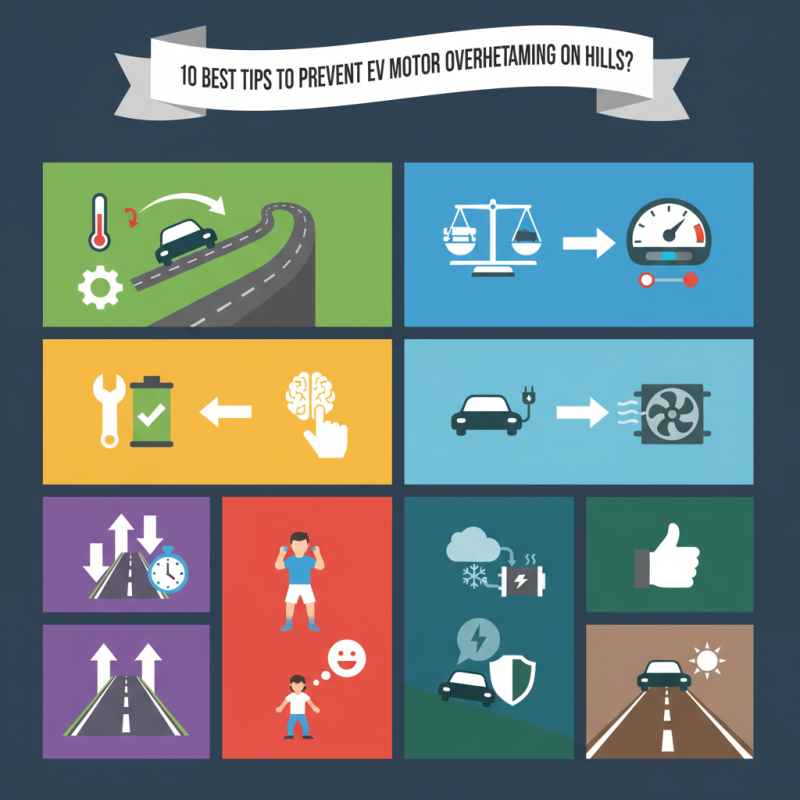
Understanding EV Motor Overheating and Its Causes
Electric vehicle (EV) motors can overheat, especially on steep inclines. Overheating occurs due to excessive heat generated during high loads. Understanding the causes is critical for preventing issues. Factors include increased power demand and inadequate cooling systems. When climbing a hill, motors work harder, leading to elevated temperatures.
To mitigate this risk, one effective tip is to
decrease acceleration. Gradual acceleration can reduce strain on the motor. Also, consider using regenerative braking when descending. It helps in cooling the motor while recharging the battery. Monitoring motor temperature and performance is essential. Tools like temperature sensors can provide real-time data for better management.
Another useful suggestion is to maintain proper tire pressure. Under-inflated tires create additional drag, leading to increased motor workload. Ensure regular maintenance as well. Check for any cooling system blockages or leaks. Understanding your driving patterns can help avoid unnecessary strain. Learning to navigate hills more efficiently may reduce the risk of overheating.
The Role of Battery Management Systems in Temperature Control
Battery Management Systems (BMS) play a crucial role in preventing electric vehicle (EV) motor overheating, particularly when navigating hills. These systems monitor the temperature of the battery pack and adjust its performance accordingly. Studies show that overheating can reduce an EV’s efficiency by up to 30%. Effective temperature management is vital to maintaining vehicle performance and longevity.
Advanced BMS utilize real-time data to gauge heat levels. They employ algorithms that optimize power output and cooling mechanisms. For instance, some systems use liquid cooling to regulate temperatures, allowing for sustained high performance. Research indicates that a BMS can enhance battery life by as much as 20% when properly managing temperature. The importance of these systems cannot be overstated, especially on steep inclines where motor strain increases.
While BMS technology is evolving, some limitations remain. Not all BMS can handle extreme temperature variations effectively. Drivers may notice a loss in acceleration when the system takes preventive measures. This highlights an area for improvement in future models. Continuous research and development are necessary to enhance BMS capabilities, ensuring EVs can tackle steep terrains without the risk of overheating.
Techniques for Efficient Driving on Inclines to Reduce Heat
Driving an electric vehicle (EV) on hills can be challenging. The incline demands more energy from the motor, which can lead to overheating. Efficient driving techniques help mitigate this issue. A study by the Electric Vehicle Research Institute indicates that nearly 30% of EV motor failures stem from overheating during demanding conditions.
Maintaining a steady speed is crucial. Rapid acceleration increases the load on the motor. Instead, gently apply pressure to the accelerator. Using regenerative braking also helps. It converts kinetic energy back into battery power. This process not only enhances range but reduces heat generation. Tips suggest using lower gears when climbing steep slopes. This can keep the motor within an optimal temperature range.
Monitoring battery temperature is important. Many EVs provide real-time data on heat levels. Drivers should understand their vehicle's limits. Ignoring signs of overheating may lead to serious damage. Having cooling systems inspected regularly is wise. Drivers should also stay informed about weather conditions. Hot weather can exacerbate motor stress. By adjusting their driving style, EV users can enhance performance. A well-informed driver is essential for preventing overheating issues on inclines.
Cooling System Upgrades for Enhanced EV Performance on Hills
Electric vehicles (EVs) face unique challenges when climbing hills, particularly related to motor overheating. An efficient cooling system is essential for maintaining peak performance. Industry reports indicate that a significant percentage of EV owners have reported overheating issues during steep ascents, demonstrating the need for effective solutions.
Upgrading the cooling system can greatly enhance an EV's performance on inclines. Advanced cooling techniques, such as liquid cooling, offer better thermal management than standard air cooling. A study by the American Society of Mechanical Engineers highlights that liquid cooling systems can reduce motor temperatures by up to 35%. This change can prolong the lifespan of critical components, ensuring your vehicle runs smoothly on steep terrains.
Utilizing heat exchangers can also improve heat dissipation. Their strategic placement near high-heat areas allows for faster cooling responses. However, it's important to consider potential design flaws during installation. If done incorrectly, it could lead to air leaks or inadequate airflow, resulting in new overheating issues. Continuous assessments and refinements of the cooling system can help in achieving optimal performance for EVs tackling challenging hills.
Regular Maintenance Practices to Prevent Overheating Issues
Maintaining an electric vehicle (EV) is crucial for optimal performance, especially on challenging terrains. Regular maintenance practices significantly reduce the risks of motor overheating. Data indicates that nearly 30% of EV issues stem from overheating in conditions like steep hills. Checking coolant levels and ensuring proper coolant circulation are essential steps. Coolant protects the motor from excess heat, allowing it to function effectively.
Battery inspections should occur at regular intervals. Research shows that a well-maintained battery can operate 20% more efficiently. Look for signs of corrosion around terminals and ensure connections are tight. Regular cleaning helps maintain optimal performance.
Consider the driving habits as well. Gradual acceleration and avoiding steep inclines can help reduce stress on the motor. Reports suggest that simple adjustments in driving style can improve overall efficiency by up to 15%. Integrating these maintenance practices fosters a reliable and efficient EV experience, particularly in mountainous regions.
FAQS
: Overheating occurs due to high power demands and inadequate cooling systems, especially on steep inclines.
Decrease acceleration and apply gradual pressure on the accelerator to lessen the load on the motor.
It helps prevent overheating. Real-time data allows drivers to manage performance effectively.
Under-inflated tires increase drag, putting extra strain on the motor and leading to potential overheating.
Regularly check coolant levels, inspect the cooling system, and maintain battery efficiency through cleaning.
Yes, gradual acceleration and avoiding steep inclines can significantly reduce stress on the motor.
It helps cool the motor and recharges the battery, improving efficiency during descents.
Yes, hot weather can increase motor stress, so adjusting driving style is essential.
Regular inspections are crucial to prevent blockages and ensure proper cooling performance.
Simple adjustments may enhance overall performance, potentially boosting efficiency by up to 15%.
Conclusion
Electric vehicles (EVs) can experience overheating, especially when navigating hills, prompting the question, "Why is my EV motor overheating on hills?" Understanding the causes of EV motor overheating is essential, as it can stem from factors like excessive load, inadequate cooling, or inefficient driving techniques. Battery management systems play a crucial role in regulating temperature, helping to prevent overheating during challenging terrains.
To minimize heat build-up on inclines, drivers can adopt efficient driving techniques, such as maintaining a steady speed and utilizing regenerative braking. Additionally, enhancing cooling systems can significantly improve performance on hilly routes. Regular maintenance practices, including checks on the cooling system and battery health, are vital to proactively address and prevent overheating issues, ensuring a safer and more efficient driving experience in electric vehicles.

 Evergreen Vehicle