As urban mobility continues to evolve, many riders ask, "What is the difference between an e-bike and an electric moped?" Industry analyst Jennifer Lee states, "Understanding these distinctions is crucial for making informed decisions." The growing market, projected to reach $23 billion by 2026, highlights the importance of clarity in definitions.
E-bikes typically range from 20 to 28 mph and rely on pedaling alongside electric assistance. In contrast, electric mopeds often have a maximum speed of 28 mph and do not require pedaling. With an average weight difference of around 30 pounds, e-bikes generally feel lighter and more agile. Conversely, mopeds offer a more stable riding experience, making them suitable for longer trips.
Studies show that 60% of riders prefer e-bikes for fitness and leisure. Meanwhile, electric mopeds attract those seeking convenience for commutes. As riders navigate their choices, the clarity between these two options becomes pivotal. Both vehicles still show room for improvement in technology and regulation, indicating that consumer education remains essential.
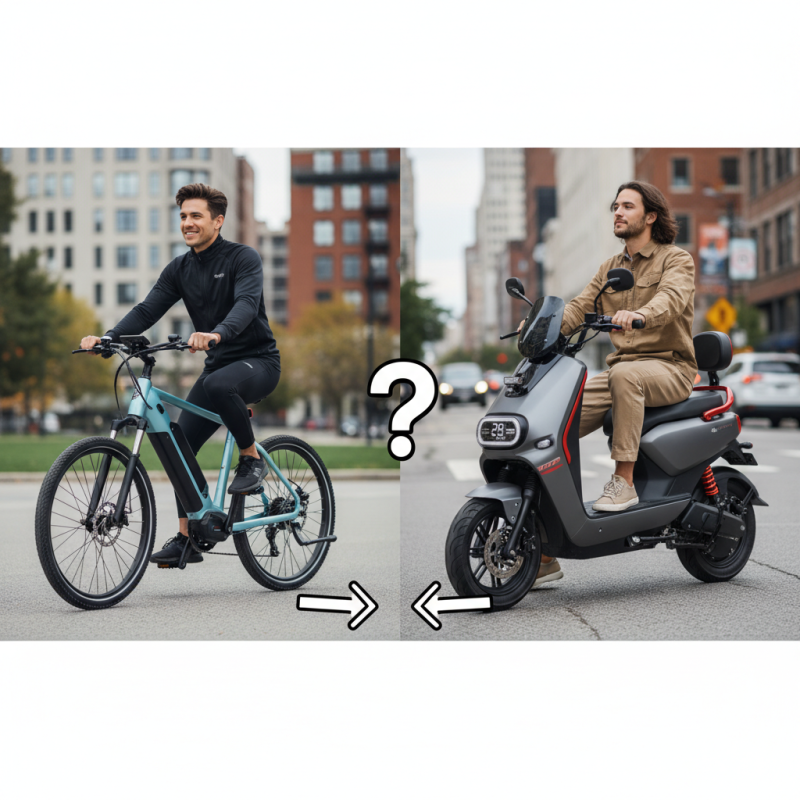
E-bike vs. Electric Moped: Defining Key Terminology
E-bikes and electric mopeds are popular choices for urban commuting. Understanding their key differences can help you make an informed decision. E-bikes generally resemble traditional bicycles but include an electric motor to assist pedaling. These are often lighter and offer riders the option to exercise while commuting. On the other hand, electric mopeds provide a more robust alternative, featuring a throttle for power and a resemblance to scooters. They typically do not require pedaling and can reach higher speeds.
When considering your usage, think about practicality. E-bikes are ideal for short trips and may need bike lanes for safe navigation. However, if you need a faster option without pedaling, electric mopeds can cover longer distances more comfortably. Riders should also evaluate their local laws, as regulations for each vehicle type may differ.
Tips: Always wear a helmet for safety. Regular maintenance is crucial; check brakes and tires often. Finally, consider how frequently you'll use the vehicle. This might affect your overall satisfaction with either choice.
2026 Top Differences Between E-bikes and Electric Mopeds
| Feature |
E-bike |
Electric Moped |
| Top Speed |
25-28 mph |
28-30 mph |
| Legal Classification |
Bicycle |
Motor vehicle |
| License Requirement |
No |
Yes (varies by region) |
| Pedal Assist |
Available |
Not usually |
| Battery Range |
20-60 miles |
25-40 miles |
| Weight |
40-70 lbs |
50-100 lbs |
| Cost Range |
$1,000 - $3,500 |
$1,500 - $5,000 |
| Parking Regulations |
Bicycle parking |
Motor vehicle parking |
Framework of Operation: How E-bikes and Electric Mopeds Work
E-bikes and electric mopeds operate on different principles, impacting their use.
E-bikes utilize pedal-assist technology. This means riders must pedal to engage the motor. In contrast, electric mopeds offer a throttle system, allowing riders to control speed without pedaling. According to the Light Electric Vehicle Association, e-bikes can reach speeds of 28 mph, while some mopeds can exceed 40 mph.
Battery types also vary significantly. E-bikes often use lithium-ion batteries. They typically provide a range of 20 to 50 miles on a single charge. Electric mopeds may feature larger batteries, resulting in a range of 30 to 70 miles. However, more significant batteries contribute to heavier vehicles, affecting maneuverability in urban areas.
Tip: Understanding your needs is crucial when choosing between these vehicles. E-bikes are ideal for exercise and commuting in bike lanes. Electric mopeds are suited for longer distances without physical effort.
Maintenance can vary too. E-bikes require regular inspections of the drivetrain and tires. On the other hand, electric mopeds need checks on their electrical systems and brake performance. Users should regularly review their vehicles to ensure longevity.
Design and Build: Comparing Frame Structure and Components
When examining the structural differences between e-bikes and electric mopeds, frame design is crucial. E-bikes typically boast a lightweight aluminum or carbon frame. This construction allows for superior agility and speed. Studies indicate that most e-bikes weigh between 40 to 60 pounds. In contrast, electric mopeds feature more robust frames built from high-strength steel. They often weigh over 70 pounds, prioritizing stability over rapid maneuverability.
The components also diverge significantly. E-bikes rely on high-quality bicycle components. These include gears, brakes, and tires designed for performance. According to industry reports, e-bike tires focus on narrow, slick designs for efficiency. Electric mopeds, however, often use parts similar to scooters, emphasizing durability. Their wide tires provide better traction and control, enhancing the riding experience.
This design duality highlights a critical point: choosing between the two should relate to intended use. Riders seeking versatility may prefer the lightweight build of e-bikes. Conversely, those valuing stability and comfort might lean towards electric mopeds. Understanding these distinctions promotes informed decisions in an evolving market.
Performance Metrics: Speed, Range, and Power Capacity Differences
When comparing e-bikes and electric mopeds, performance metrics are crucial. Speed, range, and power capacity differ greatly between the two.
E-bikes typically reach speeds of 20-28 mph. In contrast, electric mopeds can often go faster. It's essential to know these speeds. Some areas have speed limits. Always check local regulations.
Range varies significantly as well. E-bikes generally offer between 20 to 60 miles on a single charge. Electric mopeds, however, can provide a longer range. They often boast 30 to 70 miles or more. This difference can influence your choice, especially for longer commutes.
Consider your daily travel distance.
Power capacity influences performance, too. E-bikes usually have a power output of 250 to 750 watts. Electric mopeds can exceed 1000 watts, delivering a stronger acceleration. This trait may be alluring, but more power can lead to faster battery drain.
Tips: Always assess your riding needs before deciding. Test different models to understand speed and comfort. Also, look for features that enhance safety. These considerations can make a difference in your daily ride.
Regulatory Variations: Legal Considerations for E-bikes and Mopeds
When considering E-bikes and electric mopeds, regulatory variances stand out. Different regions have distinct laws governing these vehicles. E-bikes are often classified based on their speed and power. In many places, they are treated similarly to traditional bicycles. This simplifies regulations for riders. However, electric mopeds may be categorized under motor vehicle laws. This means a different set of requirements applies.
Licensing and registration can be confusing. Some areas require a license for riding a moped. Others might demand insurance. E-bike riders often face fewer hurdles. However, these laws are not uniform. One must understand local regulations before hitting the road. Inconsistent laws can lead to frustration.
E-bike riders might assume they have similar rights as cyclists. Yet, this isn’t always true. Electric mopeds can be held to much stricter safety standards. Riders should think critically about these differences. The impact of distinct regulations shapes how and where these vehicles can be used. Keep informed about local laws, as they can change.
2026 Top Differences Between E-bikes and Electric Mopeds
This chart illustrates the key differences between e-bikes and electric mopeds based on various parameters such as maximum speed, range, weight, legal age, and license requirements. E-bikes typically have a lower maximum speed and weight compared to electric mopeds, which require a license to operate in most regions.
FAQS
: E-bikes typically have lightweight aluminum or carbon frames, while electric mopeds use more robust high-strength steel frames.
E-bikes weigh between 40 to 60 pounds. Electric mopeds generally weigh over 70 pounds.
Key metrics include speed, range, and power capacity. E-bikes reach 20-28 mph, while mopeds can go faster.
E-bikes typically provide a range of 20 to 60 miles per charge. Electric mopeds can exceed that, offering 30 to 70 miles or more.
E-bikes usually have 250 to 750 watts, while electric mopeds can exceed 1000 watts. This can mean faster acceleration but may drain the battery quicker.
Yes, e-bikes are often treated like bicycles, while electric mopeds may fall under motor vehicle laws. This brings different regulations.
E-bike riders often face fewer requirements. In contrast, some regions require licenses and insurance for electric mopeds.
Local laws vary widely, and misunderstanding can lead to frustration or legal issues while riding your vehicle.
Riders should consider their specific needs, like speed, comfort, and safety features. Test different models to find the best fit.
Electric mopeds may be subject to stricter safety standards compared to e-bikes, affecting where and how they can be used.
Conclusion
The article "2026 Top Differences Between E-bikes and Electric Mopeds" explores the distinctions between e-bikes and electric mopeds, addressing key terminologies and operational frameworks that define each mode of transportation. It highlights how both vehicles operate, focusing on their design and build, including variations in frame structure and components. Additionally, the article delves into performance metrics, comparing aspects such as speed, range, and power capacity.
A significant point of discussion is the regulatory variations that exist, which impact the legal considerations for e-bikes and mopeds in different regions. This raises the crucial question: "What is the difference between an e-bike and an electric moped?" Understanding these differences not only aids in making informed decisions for potential users but also ensures compliance with local regulations to promote safe and responsible riding.

 Evergreen Vehicle