Old electric vehicle batteries are not ordinary household waste. Their lithium-ion cells can retain substantial energy, even after a vehicle stops driving. A damaged pack may also contain sharp metal, flammable materials, and complex electronic components. That makes careful handling essential. How to recycle old lithium batteries from electric vehicles depends on their condition, chemistry, size, and remaining capacity.
This guide examines ten practical pathways, including certified collection, battery testing, repair, second-life storage, refurbishment, material recovery, and manufacturer take-back programs. Some batteries can support solar storage or workshop power systems before recycling becomes necessary. Others should move directly to qualified recycling facilities. No single method fits every pack. That matters.
Experienced technicians inspect visible swelling, corrosion, heat damage, and unusual odors before making decisions. They also record the battery’s history, voltage, and identification details. Do not open a high-voltage pack without proper training and insulated equipment. Small mistakes can cause severe injury, fire, or expensive damage. Professional recyclers use controlled discharge, mechanical separation, and chemical recovery processes to reclaim materials such as nickel, cobalt, copper, aluminum, and lithium.
The most responsible option is not always the fastest or cheapest one. A second-life project may reduce waste, but it requires testing, monitoring, and suitable protection systems. Recycling may recover valuable materials, yet recovery rates and methods vary between facilities. This article compares the main options realistically, including their benefits, limitations, costs, and safety concerns. Some details remain uncertain. Local requirements and battery designs also change over time. Reliable decisions require current advice from vehicle manufacturers, battery specialists, and authorized recycling providers.
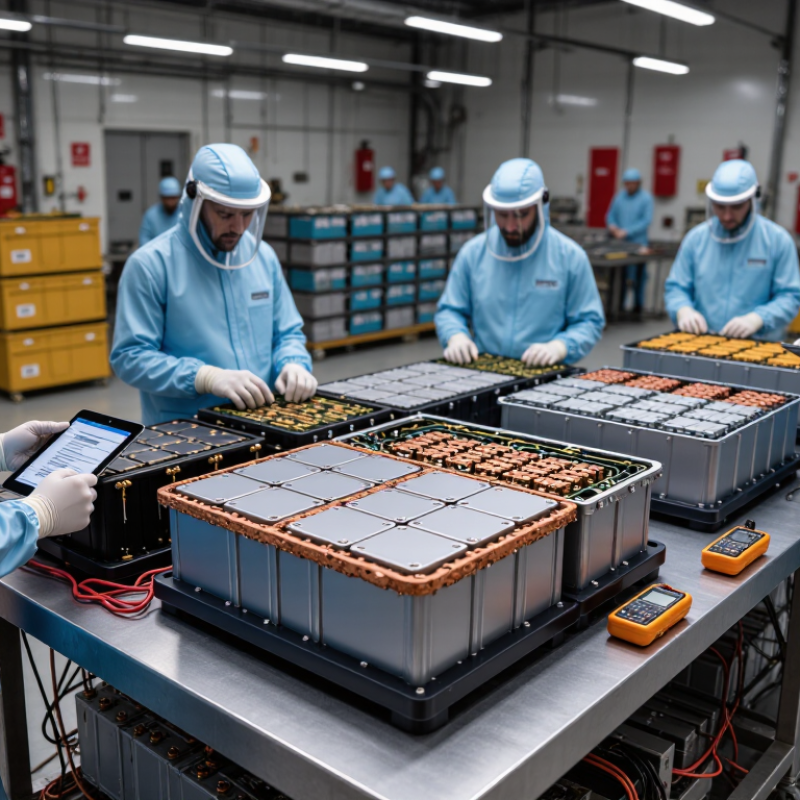
Understanding Old EV Lithium Batteries and Recycling Requirements
Old EV lithium batteries should not be treated like ordinary household waste. Safe options include battery health testing, module repair, vehicle repurposing, second-life storage, parts recovery, controlled discharge, certified collection, material separation, metal recovery, and remanufacturing. Technicians should record chemistry, voltage, damage history, and remaining capacity. A swollen pack or crushed module needs isolation. Never open it casually.
The International Energy Agency reported that global EV battery demand exceeded 750 GWh in 2023, rising by about 40% from the previous year. This growth will create more retired packs and stronger recycling pressure. The European Commission’s Joint Research Centre also highlights traceability, collection efficiency, and recovery performance as essential battery-management requirements. Recycling facilities commonly discharge packs, dismantle modules, and process materials into recoverable copper, nickel, cobalt, lithium, and graphite.
Second-life use can delay material recycling, but it requires careful testing. A battery with 75% capacity may still support stationary storage, yet hidden thermal damage can change that decision. This is where practice gets uncomfortable. Capacity alone is not enough. Recycling requirements differ by location, chemistry, and transport condition. Certified handlers, documented chain-of-custody records, fire controls, and approved transport procedures reduce risk. A complete inspection report is often more valuable than a confident guess.
Understanding old EV lithium batteries and recycling requirements through typical material-recovery performance.
Recovery rates vary according to battery chemistry, cell design, condition, pretreatment, and process controls. Hydrometallurgical routes generally recover lithium, nickel, cobalt, manganese, and copper efficiently, while pyrometallurgical routes are effective for metals but may recover less lithium. Reuse, repair, remanufacturing, and safe collection should be assessed before material recycling.
Values are indicative midpoints of ranges commonly reported in technical reviews and public battery-recycling guidance, not guarantees for a specific battery.
Before choosing a recycling route, assess the battery’s condition carefully. A visual inspection can reveal swelling, cracked casing, corrosion, leaking electrolyte, or burn marks. Any sign of damage requires isolation by trained personnel. Do not open a high-voltage pack without proper equipment and procedures. Safety comes before material recovery.
A qualified technician should record the battery’s identification details, voltage, state of charge, capacity, and internal resistance. A stable voltage reading helps, but it does not prove healthy cells. A neat reading can mislead. Thermal history also matters, especially after crashes, flooding, or overheating. Keep damaged batteries in a controlled, ventilated area away from heat and ignition sources.
Healthy modules may suit testing for controlled second-life applications, while weak packs usually need specialized material recovery. Severely damaged units require a recycler equipped for hazardous battery handling. Ask for documented testing methods and chain-of-custody records. Photographs can support the inspection record, but they cannot replace electrical testing. In practice, condition reports are sometimes incomplete, and that weakness deserves attention. A cautious decision may cost more initially, yet it reduces transport risks and prevents usable materials from being discarded too early.
| Rank | Recycling or Recovery Route | Recommended Battery Condition | Key Assessment Indicators | Typical Preparation | Materials or Value Recovered | Main Risks and Limitations |
|---|---|---|---|---|---|---|
| 1 | Direct Vehicle Reuse | Healthy and undamaged Usually suitable when indicative state of health is above 80%. |
Stable voltage, no swelling, no impact damage, no abnormal heating, acceptable insulation resistance, and a documented service history. | Qualified diagnostic testing, fault-code review, isolation verification, and inspection of the battery enclosure and cooling system. | Retains the greatest amount of embedded energy and avoids early material processing. | Requires compatibility with the original vehicle system and compliance with electrical, transport, and waste regulations. |
| 2 | Repair and Module Replacement | Partially serviceable One or more weak modules, but the enclosure and unaffected modules remain safe. |
Module voltage balance, capacity variation, insulation resistance, connector condition, thermal-management performance, and isolation-fault history. | Controlled discharge where permitted, replacement of defective modules, torque verification, sealing, and end-of-line safety testing. | Functional modules, busbars, cooling components, sensors, and housings may be returned to service. | Opening a high-voltage pack requires trained personnel; mixed-age modules can reduce reliability and usable capacity. |
| 3 | Second-Life Stationary Storage | Safe but below vehicle requirements Often considered around 60–80% state of health, subject to testing. |
Remaining capacity, internal resistance, cycle history, temperature behavior, cell imbalance, and self-discharge rate. | Module grading, matching, battery-management-system integration, enclosure design, fusing, ventilation, and fire-protection controls. | Usable electrical storage for load shifting, backup power, or renewable-energy buffering. | Lower power capability and uneven aging can shorten service life; stationary systems still require electrical and fire-safety compliance. |
| 4 | Second-Life Low-Power Applications | Moderate capacity with predictable aging Suitable for applications with lower power and energy demands. |
Capacity retention, pulse-power capability, impedance growth, temperature limits, and consistency among modules. | Reconfiguration into smaller packs, protective battery-management controls, secure mounting, and application-specific testing. | Power for low-demand equipment, mobile systems, or controlled backup applications. | Economic benefits depend on testing, repackaging, monitoring, and collection logistics; unsuitable cells must still be recycled. |
| 5 | Direct Recycling of Electrode Materials | Material-rich but not suitable for reuse Best for packs that can be safely processed without severe contamination. |
Chemistry identification, electrode condition, contamination level, moisture content, and the presence of damaged or shorted cells. | Disassembly, inert-atmosphere or controlled shredding, separation of current collectors, and treatment that preserves cathode structure where possible. | Potentially preserves cathode and anode structures, reducing some energy-intensive refining steps. | Requires accurate chemistry sorting; electrolyte, binders, impurities, and mixed chemistries can reduce product quality. |
| 6 | Hydrometallurgical Recovery | Not suitable for reuse but chemically recoverable Commonly selected for damaged, aged, or mixed-format batteries after safe pretreatment. |
Battery chemistry, metal composition, contamination, moisture, and the condition of cells, modules, and packs. | Discharge or stabilization under approved procedures, mechanical size reduction, separation, leaching, purification, and precipitation. | High-purity compounds containing valuable metals such as lithium, nickel, cobalt, manganese, copper, and aluminum, depending on chemistry. | Uses chemical reagents and generates process residues and wastewater that require treatment and controlled disposal. |
| 7 | Pyrometallurgical Recovery | Severely degraded or difficult-to-disassemble material Used when robust thermal processing is more practical than extensive sorting. |
Pack integrity, chemistry mix, metal content, moisture, and the presence of plastics or other combustible materials. | Safety inspection, approved feed preparation, controlled thermal processing, and downstream treatment of ash, slag, and off-gases. | Typically concentrates nickel, cobalt, copper, and other metals; lithium recovery depends on the specific process. | High energy demand and off-gas treatment requirements; some materials may report to slag rather than a recoverable product. |
| 8 | Mechanical Separation and Material Sorting | Pack can be safely stabilized and dismantled Often used as a front-end step before chemical or thermal recovery. |
Visible damage, residual charge, pack architecture, cell format, chemistry labels, and the likelihood of cross-contamination. | Isolation, controlled dismantling, shredding or crushing in approved equipment, screening, magnetic separation, and density or air classification. | Black mass, copper, aluminum, steel, plastics, and other separated fractions for further processing. | Mechanical processing alone does not fully recover battery-grade materials and can create fire, dust, and electrolyte-vapor hazards. |
| 9 | Component and Metal Recovery from Packs | Pack-level components remain usable Applies when modules are unsuitable but housings or ancillary parts are intact. |
Condition of the enclosure, cooling plates, contactors, fuses, wiring, sensors, busbars, and fasteners. | De-energization, controlled disassembly, cleaning, electrical verification, material sorting, and recycling of non-reusable parts. | Aluminum and steel housings, copper conductors, electronics, cooling hardware, and reusable fasteners. | Parts may be contaminated or safety-critical; reuse requires traceability and testing, while residual cells need a separate route. |
| 10 | Specialized Treatment for Damaged or End-of-Life Packs | Damaged, swollen, leaking, flooded, burned, or thermally unstable | Smoke, odor, hissing, heat, deformation, electrolyte leakage, corrosion, water exposure, impact marks, and signs of thermal runaway. | Do not dismantle or transport without specialist guidance; isolate the pack, prevent short circuits, document its condition, and use approved hazardous-battery handling procedures. | Recoverable metals and battery materials after stabilization and controlled downstream processing. | Highest risk of fire, electric shock, toxic exposure, and reignition; emergency, hazardous-waste, and transport rules may apply. |
| Important screening note: State-of-health percentages are indicative screening ranges, not universal acceptance thresholds. A qualified technician should confirm voltage balance, insulation resistance, temperature behavior, physical condition, chemistry, and safety history before selecting a route. Never puncture, open, burn, or place a damaged lithium battery in ordinary recycling or household waste. | ||||||
Used EV battery packs are not ordinary scrap; they may retain high voltage and stored chemical energy. The International Energy Agency’s Global EV Outlook 2024 reports that EV battery demand exceeded 750 GWh in 2023. That scale makes disciplined handling essential, not optional.
Before removal, isolate the vehicle, photograph damage, record its state of charge, and identify the pack. Only trained technicians should disconnect high-voltage circuits. Wear voltage-rated gloves, face protection, and insulated footwear. Do not puncture, open, crush, or casually test a swollen pack. A damaged unit needs controlled quarantine, away from buildings, drains, and ignition sources. Keep it visible. For transport, use packaging that prevents movement, terminal contact, and moisture exposure. Follow current dangerous-goods rules in the shipping jurisdiction. Use a qualified carrier and provide accurate weight, chemistry, condition, and damage information. Never conceal thermal damage. Storage requires a cool, dry, monitored location with restricted access. Separate suspect packs from sound packs, then inspect for heat, odor, swelling, smoke, or hissing. U.S. Environmental Protection Agency guidance supports using qualified handlers instead of ordinary waste streams. Emergency procedures should be written and accessible, not remembered vaguely. My caution is simple: temperature logs help, but they cannot replace physical inspections. Labels get missed.
Top 10 Ways to Recycle Old EV Lithium Batteries?
Exploring Ten Practical Recycling and Reuse Pathways
Old EV batteries rarely need one fixed solution. Their condition decides the route. The IEA’s Global EV Outlook 2024 reported over 750 GWh of electric-car battery demand in 2023, creating a rapidly growing future waste stream. Practical pathways include diagnostic testing, module repair, pack remanufacturing, solar storage, home backup power, commercial peak shaving, microgrid support, low-speed mobility, hydrometallurgical recovery, and direct-cathode recycling. Some packs still retain useful capacity. Others do not.
Technicians can inspect voltage balance, insulation resistance, temperature history, and remaining capacity before reuse. A healthy module may support a small solar system, while damaged cells require controlled material recovery. Hydrometallurgy uses liquid chemicals to recover valuable metals, often with lower furnace temperatures. Direct recycling aims to preserve cathode structures, according to research supported by the U.S. Department of Energy’s ReCell Center. Yet laboratory success does not guarantee affordable mass production. That is the uncomfortable part.
Safety must guide every pathway. Swollen packs should not enter informal repair channels. Trained facilities need fire isolation, traceable testing, and compliant transport procedures. Recovery rates also vary by chemistry, pack design, and contamination. The IEA notes that recycling can reduce future pressure on critical mineral supply, but collection systems remain uneven. Ten pathways sound impressive. Some will still fail economically.
Professional battery processing begins with safe collection, testing, and classification. Technicians measure remaining capacity, damage, chemistry, and thermal risk before choosing reuse or recycling. Packs with usable cells may support stationary storage, while damaged units require controlled dismantling. Guesswork is dangerous.
The International Energy Agency’s Global EV Outlook 2024 reported that electric vehicle battery demand exceeded 750 GWh in 2023. That volume creates a growing stream of recoverable materials. Processing facilities discharge packs, remove casings, separate wiring, and shred cells inside controlled equipment. The resulting black mass contains lithium, nickel, cobalt, manganese, copper, and graphite. Hydrometallurgical methods can dissolve and separate metals with high selectivity. Pyrometallurgical methods use heat, although they may consume more energy and lose some materials.
Recovery is not equally efficient for every chemistry. Lithium iron phosphate batteries contain no nickel or cobalt, but their lithium and graphite still have value. A 2024 International Energy Agency critical-minerals analysis indicated that recycling could significantly reduce future primary mineral requirements. Exact benefits depend on collection rates, battery design, and process quality. The numbers are encouraging, but not clean.
The European Commission’s Joint Research Centre has also emphasized traceability, lifecycle assessment, and transparent recovery data. A reliable processor records each battery’s origin, chemistry, weight, treatment route, and recovered output. Manual sorting remains imperfect. Small cells can hide inside damaged modules. Moisture can distort results. Continuous auditing matters more than impressive claims.
No. They may retain high voltage and chemical energy. Use certified collection and approved recycling channels.
Record its chemistry, voltage, capacity, weight, charge level, and damage history. Photographs also help.
Isolate it immediately in a controlled quarantine area. Keep it away from buildings, drains, heat, and ignition sources. Never open it casually.
Sometimes. A pack with about 75% capacity may still work. Hidden thermal damage can change that decision.
No. Capacity alone misleads. Inspect thermal history, swelling, chemistry, insulation, and physical damage.
Prevent movement, terminal contact, and moisture exposure. Use approved packaging and a qualified carrier. Report damage honestly.
Facilities discharge packs, remove casings, dismantle modules, and separate materials. Controlled equipment then processes the cells.
Recovery may include lithium, nickel, cobalt, manganese, copper, and graphite. Results vary by chemistry and process quality.
Records link each pack to its chemistry, origin, weight, treatment route, and recovered output. Labels can be missed, so audits matter.
This guide explains How to recycle old lithium batteries from electric vehicles by first understanding their chemistry, condition, and recycling requirements. Before selecting a route, inspect the battery for damage, swelling, leakage, remaining capacity, and signs of thermal risk. Used packs should be isolated, protected from short circuits, stored in a cool, dry, secure area, and transported only through appropriate professional channels that follow applicable safety and environmental rules.
It then presents ten practical pathways, including diagnostic testing, repair, repurposing for stationary energy storage, component recovery, battery refurbishment, collection programs, controlled dismantling, and professional recycling. When reuse is no longer suitable, certified processing facilities can separate and recover valuable materials such as lithium, nickel, cobalt, copper, aluminum, and other components. The overall goal is to maximize safe reuse and material recovery while reducing waste, preventing hazards, and ensuring every battery is handled responsibly from assessment through final processing.

Evergreen Vehicle