How to Waterproof an Electric Kick Scooter for Rain?

Time:2026-09-22 Author:Isabella
0%

Learning how to waterproof an electric kick scooter for rain requires more than covering the handlebars. Water can enter through the charging port, deck seams, display buttons, and cable openings. Even a scooter labeled water-resistant is not automatically safe during heavy rain, deep puddles, or flooding. Manufacturers usually define specific limits through an IP rating, so check the manual before changing anything. Some models tolerate light splashes, while others should remain completely dry.

This guide focuses on practical protection without encouraging risky modifications. Inspect the rubber charging-port cover, deck gasket, and folding-joint seals before every wet-weather ride. A loose seal can look harmless but allow water toward sensitive electronics. Use a fitted waterproof cover only when the scooter is parked, never while riding. Keep a soft microfiber cloth nearby, and dry the underside after returning home. Do not use a high-pressure hose or place the scooter near a heater. Heat may damage batteries, plastics, or adhesives.

Small mistakes matter.

I have found that riders often focus on the battery compartment and overlook the brake controls. That is worth reconsidering. No homemade seal can guarantee complete waterproofing, especially after crashes, repairs, or aging. If moisture appears near the charging socket, stop using the scooter and seek qualified service. This approach balances everyday experience with manufacturer guidance, realistic limitations, and rider safety. The goal is not to make an electric scooter amphibious. It is to reduce preventable water exposure and recognize when riding in rain is no longer sensible.
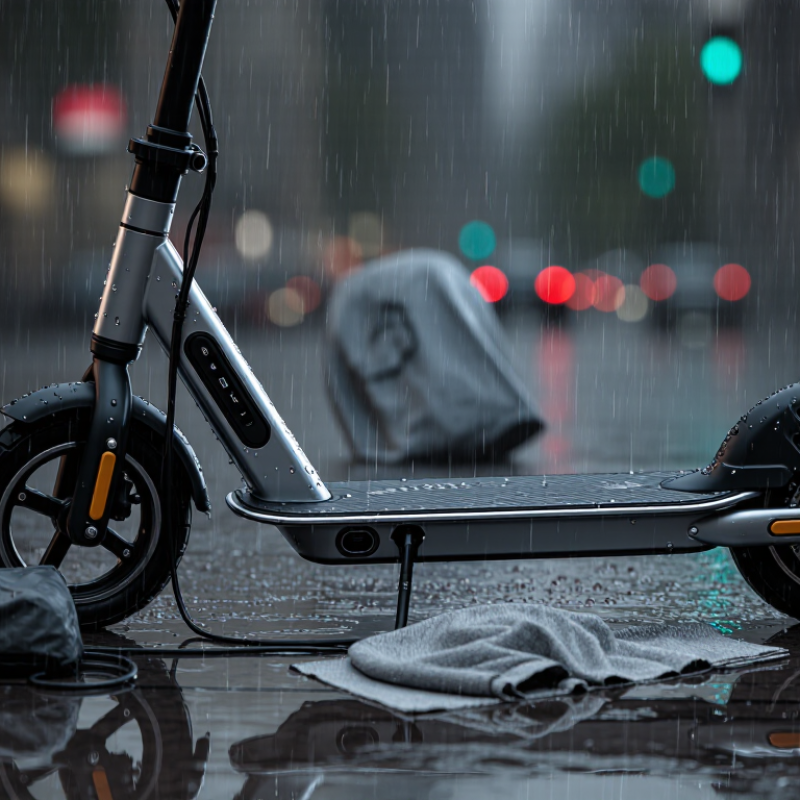
How to Waterproof an Electric Kick Scooter for Rain?

Assess the Scooter’s Water-Resistance Limits and Vulnerable Components

Before waterproofing an electric kick scooter, identify its actual water-resistance limit. Check the manual for an IP rating, but treat it as guidance, not a rain guarantee. IP tests use controlled water exposure, while roads add puddles, spray, dirt, and pressure. A light shower is different from standing water. Do not ride through deep puddles. Keep it dry. Look for missing seals, cracked deck covers, and loose fasteners. These small faults can redirect water into the battery compartment.

The charging port deserves special attention. Its rubber cover must close fully, without grit trapped underneath. Never charge the scooter while the port, plug, or deck feels damp. Dry it naturally before connecting power. Heat guns can deform seals and damage nearby wiring. The battery, battery-management circuit, and main connectors are vulnerable components. Water may cause immediate shutdown, or delayed corrosion days later. That delay is easy to miss. Water wins quickly.

Inspect the display, throttle, brake sensors, lights, folding joint, and wheel bearings. Water entering these areas can create unreliable readings or rough movement. After a wet ride, switch off the scooter and wipe every joint. Park it upright in a ventilated room, not beside a heater. I sometimes focus too much on the deck and overlook the handlebar controls. That mistake matters. If the scooter behaves strangely, stop riding and arrange a qualified inspection. Do not open a wet battery enclosure without suitable training.

How to Waterproof an Electric Kick Scooter for Rain?

Assess the Scooter’s Water-Resistance Limits and Vulnerable Components

The chart summarizes the IEC 60529 IPX water-exposure test levels. A higher IPX level indicates a more demanding laboratory water test, but it does not mean that every electric scooter is safe to ride in heavy rain or submerge. Always follow the scooter’s own rating and operating instructions.

The most vulnerable areas are usually the charging port, battery enclosure seams, motor cable entry points, display and control switches, connectors, and exposed bearings. Keep the charging port closed, avoid puddles and immersion, dry the scooter before charging, and inspect seals after riding in wet conditions.

Reference: IEC 60529 water-ingress protection test classifications. IPX levels describe test conditions and should not be treated as a universal rain-safety guarantee.

Gather Waterproofing Supplies and Prepare a Safe Work Area

How to Waterproof an Electric Kick Scooter for Rain?

Before sealing anything, gather silicone sealant rated for electronics, self-fusing tape, heat-shrink tubing, small brushes, lint-free cloths, and disposable gloves. Use a dry, bright workspace with a nonconductive table. Disconnect the charger and remove the battery only if the manual permits it. Never work beside standing water, metal clutter, or an open flame. A grounded outlet and a residual-current device add protection, but they do not make wet work safe.

The International Electrotechnical Commission’s IEC 60529 standard defines IPX4 as protection from water splashes in every direction. It does not mean safe immersion. Check the scooter’s existing rating before adding sealant. Inspect cable entry points, charging-port covers, deck seams, and exposed fasteners. Clean these areas completely, then let them dry for several hours. Moisture trapped under tape can create corrosion later. In practice, a thicker seal is not always better. It may block drainage or hide a damaged cable. I used to overlook the charging port, and that small gap deserved more attention.

Tips: Apply sealant in thin layers. Leave moving joints flexible. Cover the motor vents without blocking heat release. Mark every connection before disconnecting it. After curing, test the scooter indoors with a dry cloth nearby. Do not ride immediately after sealing; imperfect curing can make a careful repair unreliable.

Seal the Deck, Battery Compartment, Ports, and Control Interfaces

How to Waterproof an Electric Kick Scooter for Rain?

Seal the Deck, Battery Compartment, Ports, and Control Interfaces

Rain protection starts with the deck, where water often collects under your feet. Turn the scooter off and remove its charger before inspection. Clean the deck seam with a dry cloth. Apply a thin, flexible outdoor sealant around gaps, but keep it away from moving joints. Thick sealant looks safer. It can trap moisture instead.

Inspect the battery compartment carefully. Tighten loose screws evenly, then check the rubber gasket for cracks or flattening. Replace damaged seals with weather-resistant material that fits the original groove. Do not puncture the battery case or squeeze sealant inside it. I once applied too much around a cover, and the panel stopped sitting flat. That mistake taught me to test the fit before sealing.

Protect charging ports with their fitted rubber covers. A small amount of water can remain inside after a short ride. Wipe the port completely before charging, and leave the cover open only while the area dries. Control buttons and display edges also need attention. Use a narrow bead around external seams, not over the buttons. Avoid high-pressure washing. It forces water past seals. After rain, park the scooter under cover, dry the underside, and check for fogging, corrosion, or unusual heat. These signs mean the scooter should not be used until professionally inspected.

Protect Electrical Connections, Motor Areas, and Exposed Wiring

How to Waterproof an Electric Kick Scooter for Rain?

Rain protection starts at every electrical connection. Turn the scooter off, remove the battery if possible, and let components cool. Inspect connectors for cracked insulation, loose pins, or green corrosion. Clean dry contacts with an electronics-safe cleaner, then apply a thin layer of dielectric grease around the seals. Do not fill the connector with grease. It can prevent proper contact.

Protect exposed wiring with adhesive-lined heat-shrink tubing or flexible waterproof sleeves. Leave enough slack near folding joints, because tight cables eventually split. Create a small downward loop before each connector. This drip loop guides water away from the connection.

Secure cables above the deck, but avoid sharp zip-tie pressure. I once found a cable crushed under a clamp, even though its outer sleeve looked perfect.

The motor area needs careful attention. Check the axle seals, cable entry point, and nearby fasteners for gaps. Seal openings with suitable silicone designed for electrical or outdoor use. Keep sealant away from moving parts, vents, and brake surfaces.

Never spray the motor with a pressure washer. Water may enter through bearings or tiny cable passages.

After riding in rain, wipe the deck and motor housing immediately. Let the scooter dry in a ventilated place before charging. This step feels slow. It prevents hidden moisture from causing short circuits or corrosion. Check the scooter’s stated water-resistance rating, but treat it as a limit, not permission for puddle immersion.

Test the Waterproofing and Maintain the Scooter After Rain Use

Rain protection starts with a controlled check, not a bucket of water. Before riding, inspect the charging-port cover, deck seams, display, and cable entry points. Look for lifted rubber, grit, or cracked sealant. A dry tissue inside a loose compartment can reveal moisture after a short ride. Do not spray high-pressure water. Never test by submerging the scooter. Water can travel inward before damage appears. If the manual gives an ingress rating, treat it as a limit, not a promise.

After rain use, switch the scooter off and wipe it immediately. Stand it upright in a ventilated room. Remove visible water from the deck, stem joint, brake area, and wheel guards. Keep the port dry. Open it only when the outside is dry. Wait until the port and connector are completely dry before charging. A fan helps, but direct heat can deform seals and plastic. Check for display fogging or unusual motor sounds. These signs deserve professional inspection.

I once stored a damp scooter overnight and later found corrosion around a fastener. That mistake changed my routine. I now inspect underneath the deck with a flashlight and record new marks. Stop riding if you notice a faint electrical smell, intermittent power, or a warm battery case. Clean muddy residue with a barely damp cloth, then dry every joint. Recheck tire grip and brake response before the next ride. My process is not perfect. Hidden moisture can remain, so repeated checks matter more than one successful test.

How to Waterproof an Electric Kick Scooter for Rain? — Test the Waterproofing and Maintain the Scooter After Rain Use
Component or Area Practical Water-Resistance Target Pre-Ride Inspection or Test Maintenance After Rain Use Important Safety Limitation
Charging Port and Cover Closed and fully seated Check that the rubber or plastic cover is intact, clean, and flush with the housing. Look for cracks, looseness, or trapped water. Switch the scooter off, wipe the port and cover with a dry cloth, and leave the port open in a dry, ventilated area until completely dry before charging. Never connect a charger while the port, plug, or connector is wet. Do not use compressed air or direct heat to force-dry the port.
Battery and Controller Compartment Use only the protection level stated in the scooter manual Inspect visible seams, gaskets, cable entry points, and fasteners for gaps or damage. Do not open a sealed battery enclosure for an improvised water test. Dry the exterior and store the scooter indoors at room temperature. If water may have entered the deck, do not power on or charge it until inspected by a qualified technician. Water resistance is not the same as waterproofing. Do not immerse the scooter or deliberately spray water into seams.
Deck and Underside No standing water or damaged sealant Check the deck surface, underside, cable openings, and screw areas for cracks, missing sealant, or loose panels. Confirm that drainage paths are not blocked. Wipe off water and mud immediately. Allow the underside to air-dry before storage, especially around cable openings and the rear light area. Do not drill extra drainage holes or apply sealant over moving parts, vents, or electrical connectors without technical guidance.
Handlebar Controls and Display Protected against light splashing only unless a higher rating is specified Confirm that buttons, throttle, display seals, and cable boots are intact. Operate controls only after the surfaces are dry. Wipe the controls with a soft, dry cloth. If the display flickers, buttons activate by themselves, or the throttle behaves irregularly, stop riding and disconnect the battery only if the design permits it safely. Do not use a hose or pressure washer on the handlebar, display, throttle, or switches.
Motor Hubs and Wheel Bearings Avoid prolonged spray and deep puddles Spin each wheel by hand after the scooter is switched off. Listen for grinding, roughness, or unusual resistance, and check for grit around the axle seals. Remove mud with a damp cloth, dry the wheel areas, and inspect for corrosion. Do not direct water at the motor axle or bearing seals. Never submerge a motor hub. A sealed motor does not guarantee that water cannot enter through a damaged axle seal or cable passage.
Brakes and Brake Rotors Dry, clean, and responsive before normal riding In a traffic-free area, apply the brakes gently at low speed. Check that braking is smooth and that the scooter stops without pulling to one side. Wipe water and road grit from exposed brake surfaces with a clean, dry cloth. Allow wet brake components to dry before higher-speed riding. Wet brakes can temporarily reduce braking performance. Do not apply oil, grease, or general-purpose lubricant to brake rotors or pads.
Folding Mechanism and Joints Free of grit and fully locked Check the latch, hinge, locking pin, and safety collar for dirt or moisture. Confirm that the mechanism locks securely before riding. Wipe away grit and dry the joints. Use only a lubricant approved for the scooter’s hinge if the manufacturer permits it; keep lubricant away from brakes and electrical contacts. A wet or dirty latch may not lock correctly. Do not ride if the stem has play, the latch is loose, or the locking indicator is unclear.
Water-Resistance Rating Follow the exact IP rating in the manual Interpret the rating correctly: IPX4 generally indicates splashing water; IPX5 indicates water jets; IPX6 indicates powerful water jets. The “X” means dust protection was not rated. Record any symptoms after rain, such as display faults, reduced power, or charging errors, and arrange a technical inspection if they persist. IPX4, IPX5, and IPX6 do not mean the scooter is suitable for immersion. IP ratings do not cover every real-world condition, such as damaged seals or salt water.
Drying and Storage Dry before charging or long-term storage Inspect the entire scooter for droplets, mud, condensation, and water inside the charging-port cover or deck seams. Park indoors in a dry, ventilated location. Keep it upright if practical, remove surface moisture, and wait until all connectors are dry before charging. Do not dry the scooter with a heat gun, hair dryer on high heat, radiator, or open flame. Avoid sealed bags that can trap condensation.
Rain-Riding Decision Light rain only when permitted by the manual Check weather, visibility, road grip, puddle depth, and braking distance. Reduce speed and avoid painted markings, metal covers, leaves, and standing water. Perform the post-rain inspection before the next ride, paying special attention to charging behavior, brakes, lights, and unusual noises. Do not ride through deep puddles, flowing water, thunderstorms, or flooded roads. If the manufacturer prohibits rain use, follow that restriction.

General rule: The scooter’s manufacturer instructions and stated IP rating take priority over any general waterproofing practice. Never test water resistance by immersing, pressure-washing, or intentionally flooding an electric scooter.

FAQS

What supplies are useful for rain protection?

Gather electronics-rated silicone sealant, self-fusing tape, heat-shrink tubing, brushes, lint-free cloths, and gloves. Keep everything dry.

How should I prepare the work area?

Use a bright, dry workspace with a nonconductive table. Disconnect the charger first. Remove the battery only if the manual permits it.Never work near standing water, loose metal, or flames. A safety outlet helps, but wet work remains dangerous.

Which areas need inspection before sealing?

Check deck seams, battery-cover gaskets, charging ports, cable entries, fasteners, and display edges. Look for cracks, corrosion, and loose parts.Clean each area thoroughly. Let it dry for several hours. Trapped moisture causes later corrosion.

How can I seal the deck and battery compartment?

Apply a thin, flexible bead around deck gaps. Keep sealant away from hinges and other moving joints.Check the gasket for flattening or cracks. Use a correctly fitting weather-resistant replacement. Do not puncture the battery case.Test the cover fit first. Thick sealant can stop the panel from sitting flat.

How should I protect the charging port?

Keep the fitted rubber cover closed during rain. After riding, wipe the port completely.Leave it open only while it dries. Never charge the scooter while moisture remains inside.Small gaps matter.

How can exposed wiring resist rain?

Use adhesive-lined heat-shrink tubing or flexible waterproof sleeves. Leave slack near folding joints to prevent cable strain.Create a small downward loop before each connector. This directs water away from the connection.Avoid crushing cables with tight ties. I once trusted an intact outer sleeve too much.

How should I protect connectors and the motor area?

Inspect connectors for cracked insulation, loose pins, or green corrosion. Clean dry contacts with electronics-safe cleaner.Apply only a thin layer of dielectric grease around connector seals. Do not fill the connector.Seal cable-entry gaps carefully. Keep sealant away from vents, bearings, moving parts, and brake surfaces.

Can I ride through puddles after waterproofing?

No. A splash-resistance rating does not permit immersion or deep puddles.Avoid high-pressure washing. Water can pass through bearings and small cable openings.After rain, wipe the deck and motor housing. Dry the scooter in ventilation before charging.

How long should I wait after applying sealant?

Follow the sealant’s curing instructions. Do not ride immediately after sealing.Test the scooter indoors with a dry cloth nearby. Check for fogging, corrosion, unusual heat, or electrical problems.The repair may be imperfect. Stop using the scooter and seek professional inspection if warning signs appear.

Conclusion

Learning how to waterproof an electric kick scooter for rain begins with understanding its water-resistance limits and identifying vulnerable areas such as the deck, battery compartment, charging ports, control interfaces, electrical connections, motor housing, and exposed wiring. Before starting, gather suitable waterproof sealant, protective covers, insulating materials, cleaning supplies, and basic tools. Work in a dry, well-ventilated area with the scooter powered off and disconnected from charging. Carefully seal gaps around the deck and battery compartment without blocking ventilation or drainage paths, and protect ports and controls with properly fitted covers.

Additional attention should be given to cable openings, connectors, motor areas, and other exposed electrical parts. After completing the work, inspect every seal and test the scooter in controlled, light conditions rather than immediately riding through heavy rain or standing water. After wet use, wipe the scooter dry, check for trapped moisture, clean the contact points, and allow all parts to dry fully before charging. Waterproofing reduces risk but does not make the scooter completely safe for deep water or severe weather.

Isabella

Isabella

Isabella is a dedicated marketing professional with a sharp focus on driving brand growth and engagement through strategic content creation. With an extensive background in digital marketing, she combines her passion for storytelling with her keen understanding of industry trends to deliver......